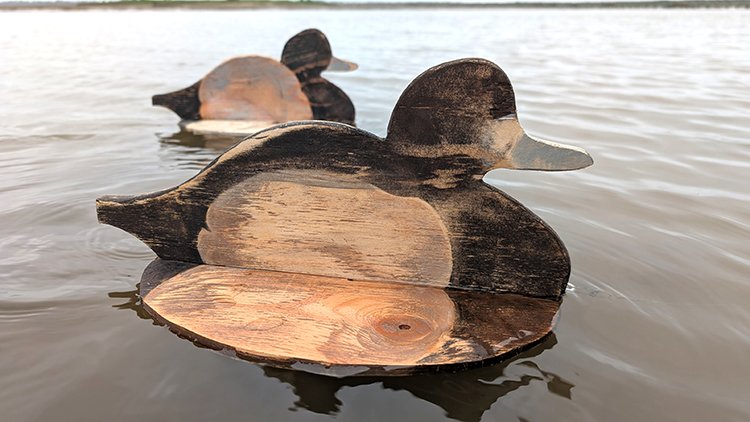
Wooden silhouettes appealed to hunters who required large numbers of lightweight, transportable waterfowl decoys that were made cheaply and quickly using only sawed boards and a fastening point for line and anchor.
Fifty to upwards of two hundred “flatties” were set out at a time along coastlines in the paths of incoming flocks of birds, their dark colors contrasted against the water pulling in diver ducks such as scaup and scoters from the sky, wings cupped into shotgun range.
Silhouettes are still in use today although they are now mass produced and made of water-resistant, lightweight and ridged corrugated plastics.
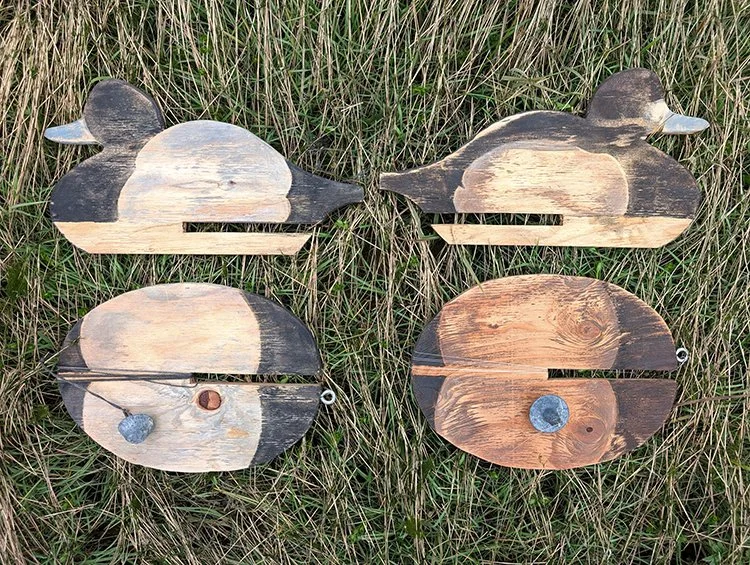
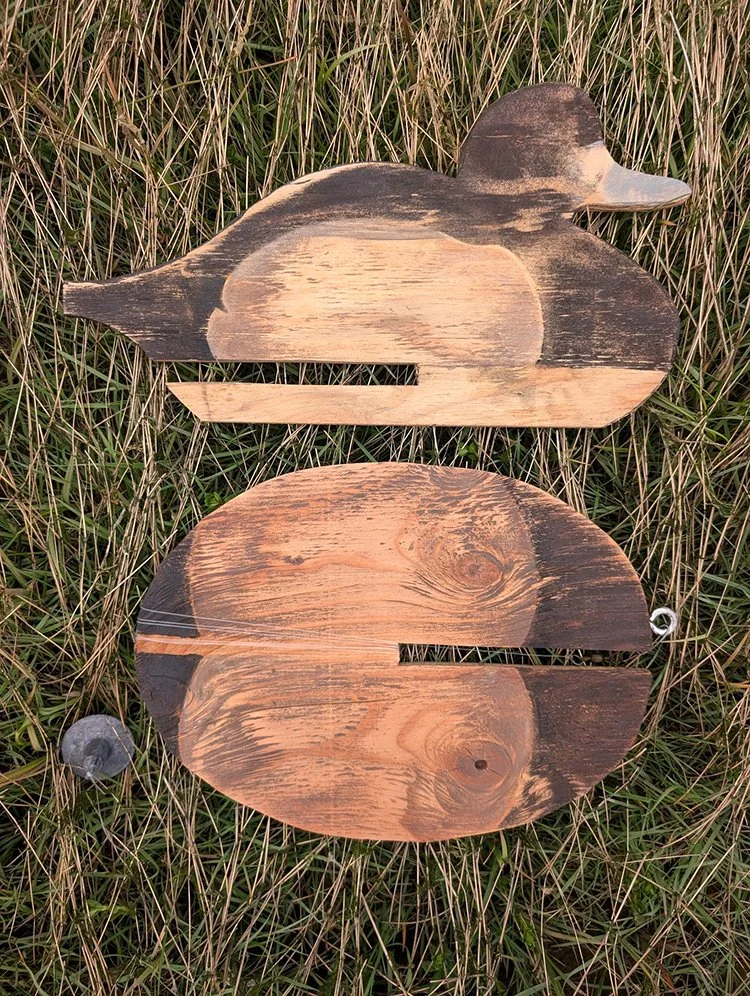
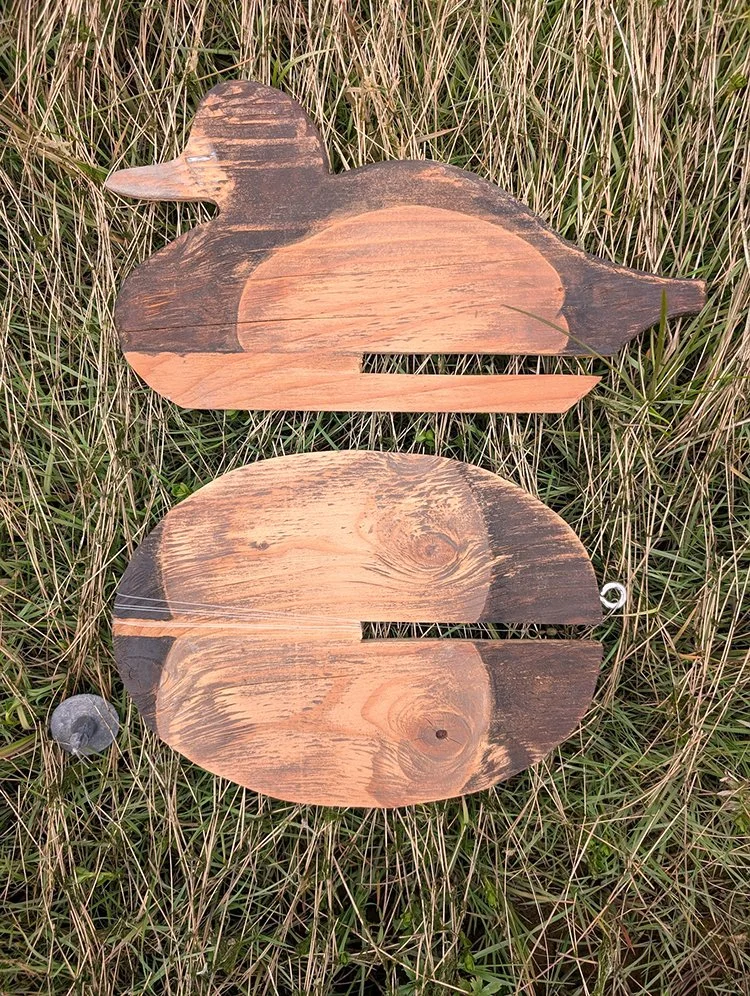
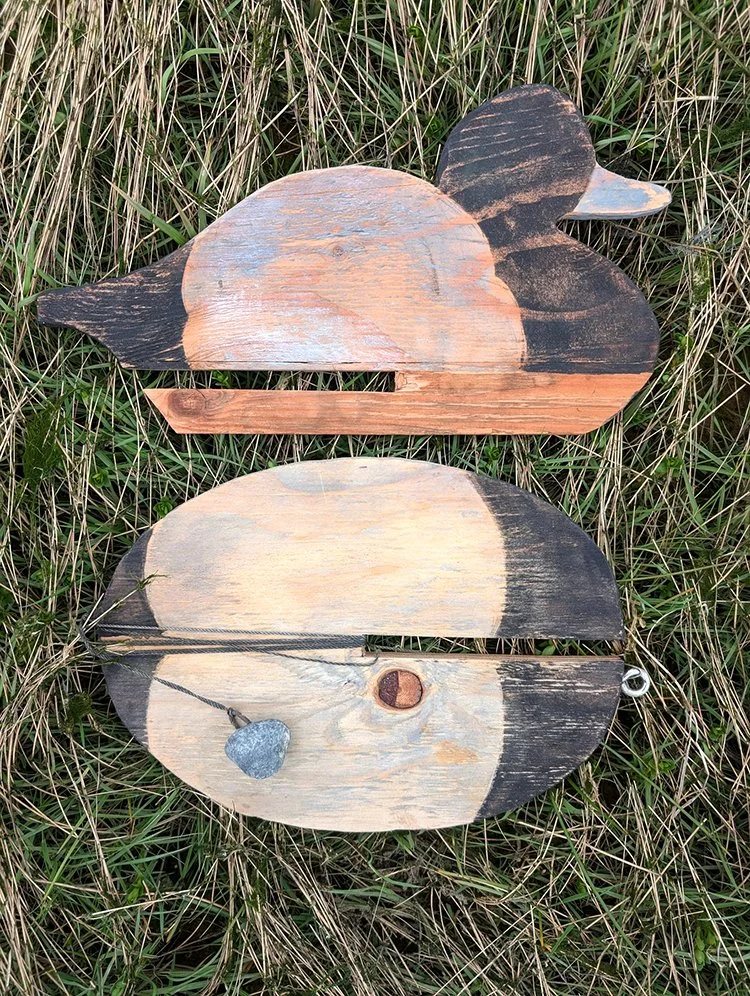
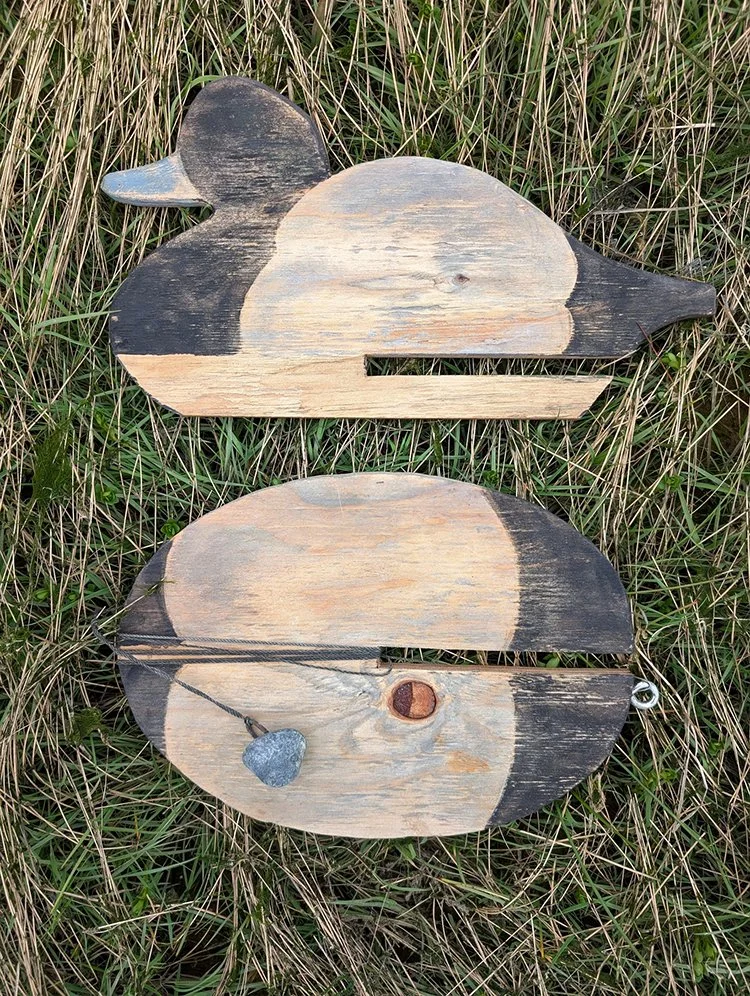
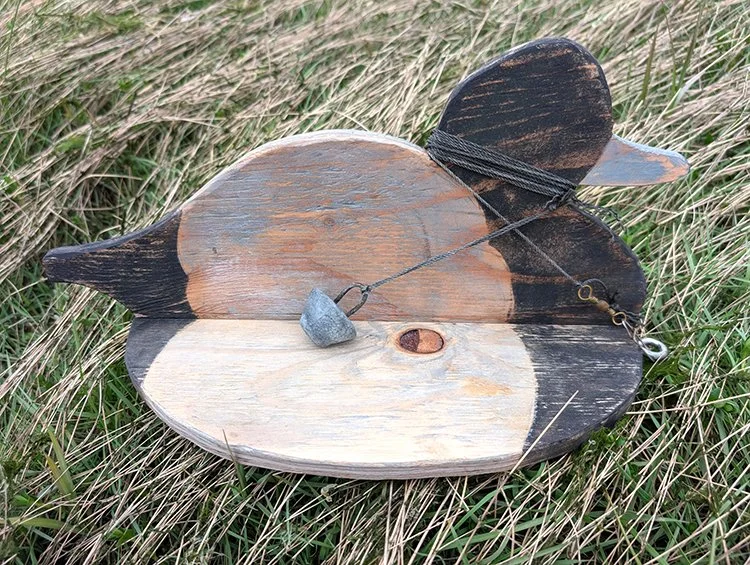
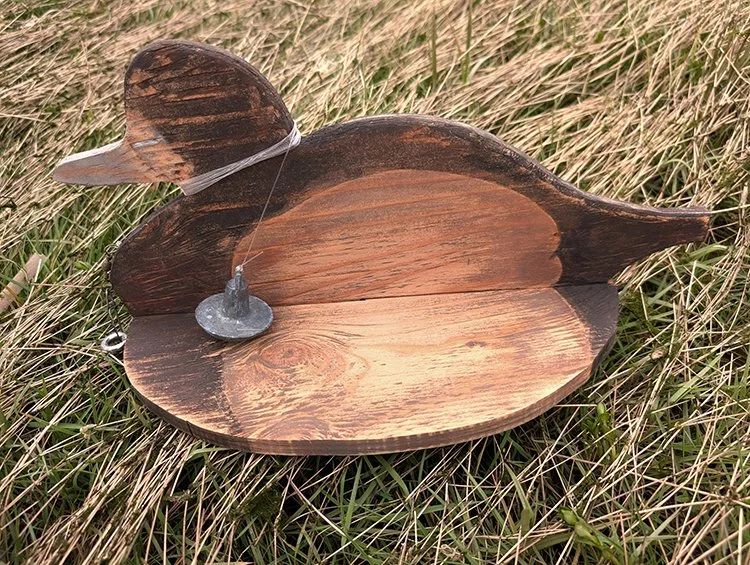
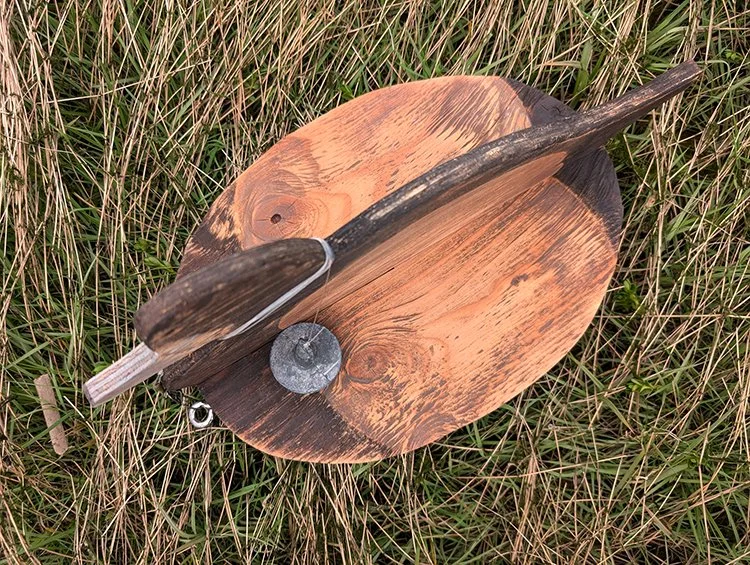
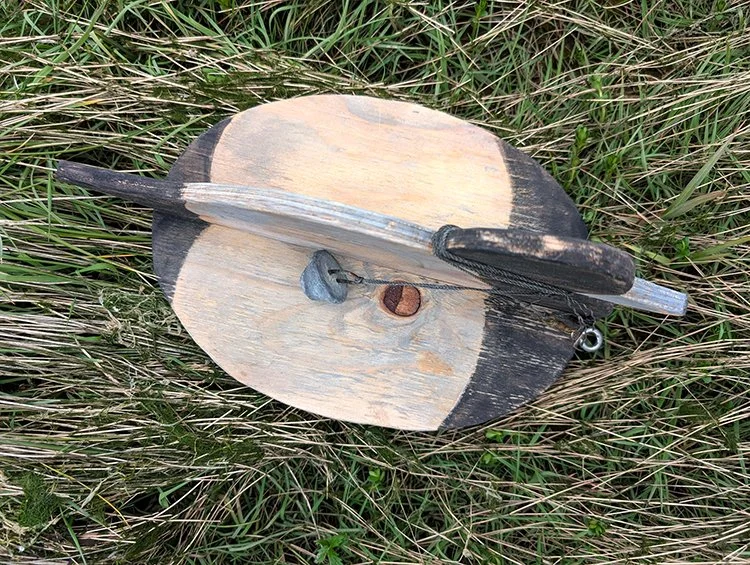
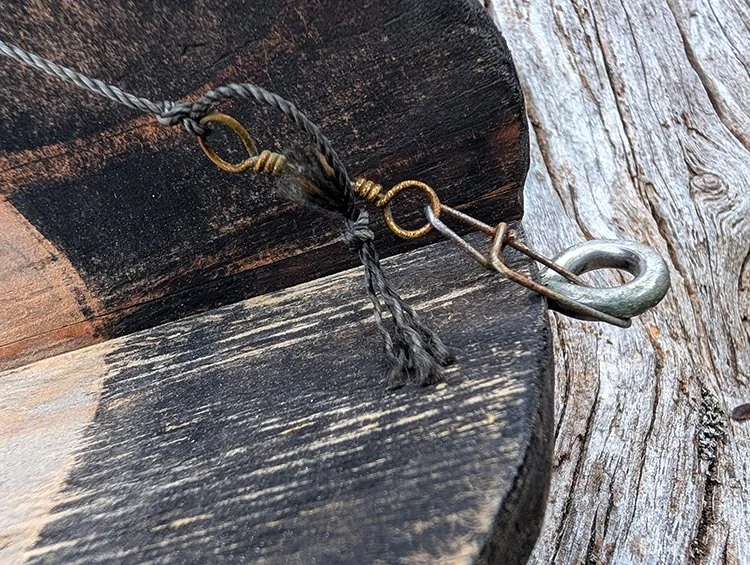
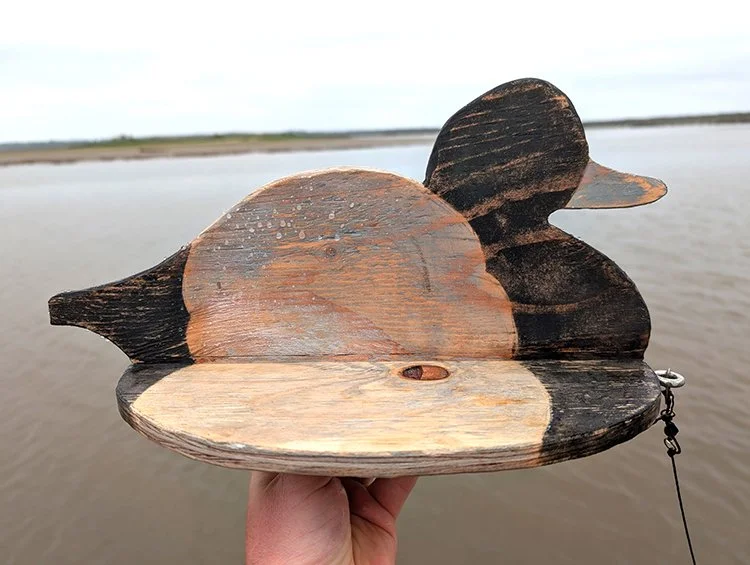
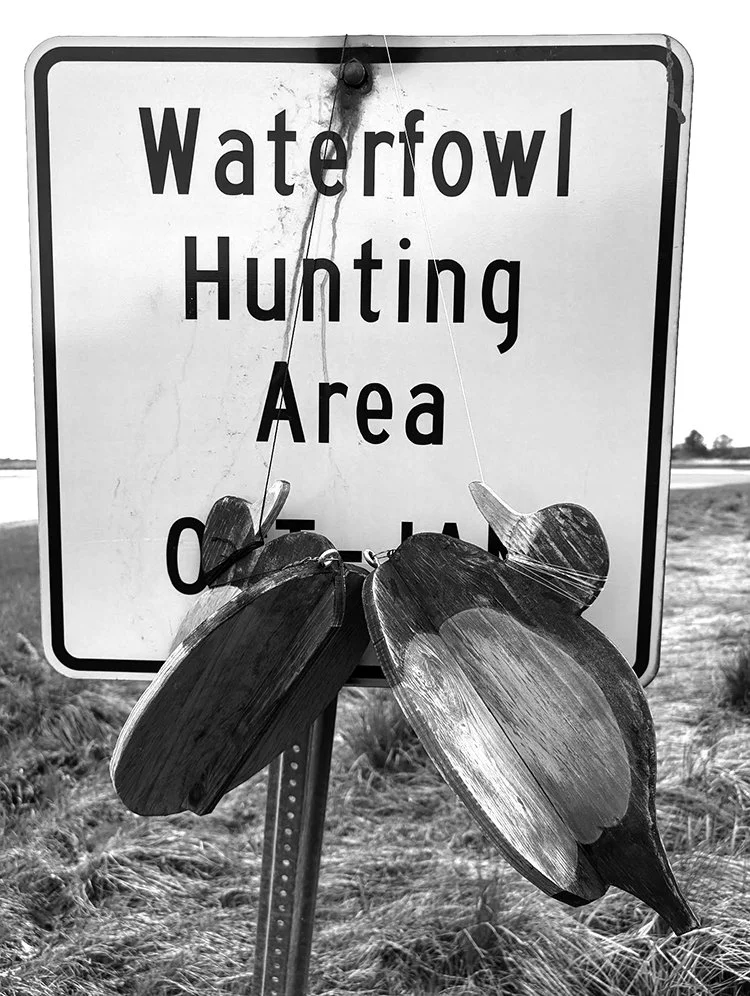
I made this pair of bluebills wanting to mimic a pair of nineteenth century working birds. The hardware is rusted, and the drake’s waxed line is faded, broken and has been retied, the hen’s line has been replaced by a stiff monofilament, both being tied to 6-ounce lead mushroom anchors for mooring in soft mud.
Each measure 14” from tail to breast, 16” wide and 7 ¼ inches from the top of the head to the bottom.
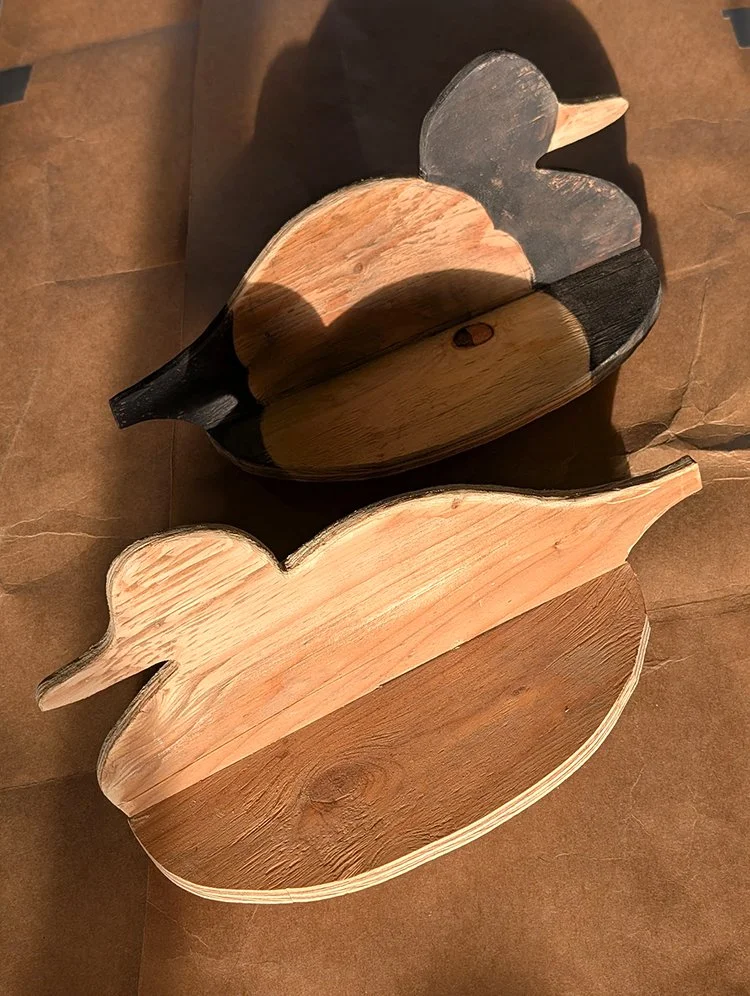
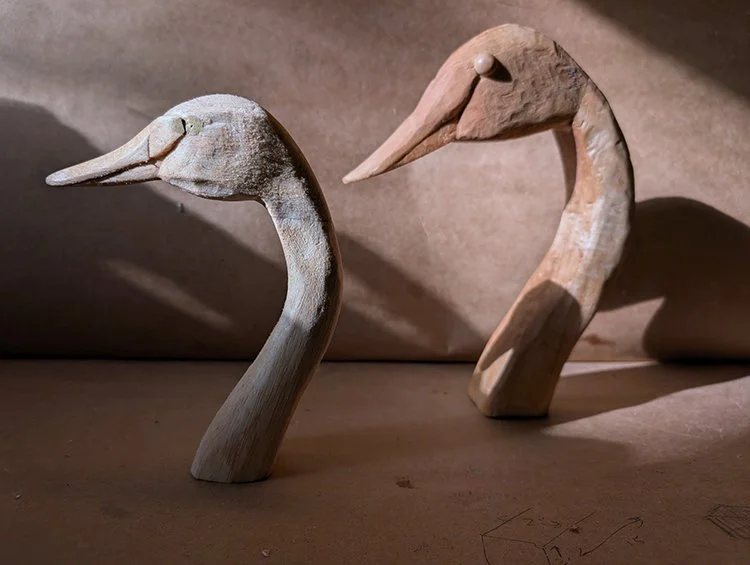
In Progress